-e36f2cb0.jpeg)
Flintshire Trail Peacocks
Now that Spring is finally here, bringing with it warmer weather and longer days, it’s time to head back to the great Welsh outdoors! With this in mind, we have put together this selection of some of the more unusual family-friendly attractions we have here in North East Wales, each one in the magical, uplifting company of animals.
-b5ca1ebd.jpeg)
Peacocks: Symbols of Beauty, Power, and Myth Across Cultures
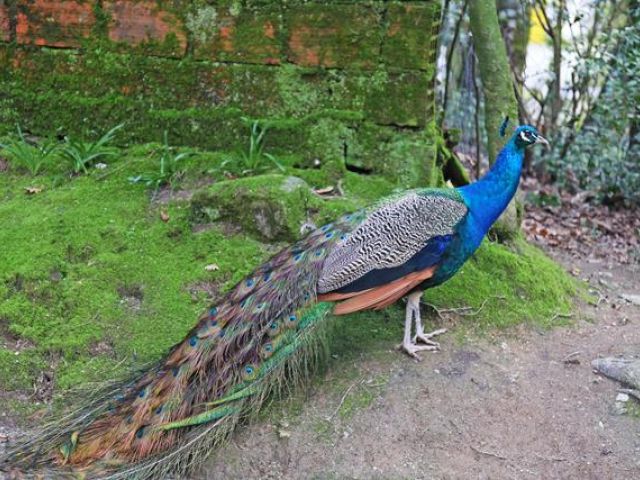
Peacocks, with their vibrant, iridescent feathers and mesmerizing, shimmering, displays, have captivated human imagination for centuries. Native to South Asia, particularly India, these majestic birds have been woven into the cultural, religious, and mythical fabric of many civilizations.
From symbolising royalty, to representing immortality, peacocks hold a special place in various traditions and stories worldwide.
-7a42c057.jpeg)
Peacocks in Hinduism and Indian Culture
The peacock is the national bird of India, and is deeply revered. It is most prominently associated with the Hindu god Kartikeya, the god of war, who rides a peacock as his vehicle.
The peacock is also associated with Krishna, one of Hinduism's most beloved deities. Krishna is often depicted wearing a crown adorned with a peacock feather, symbolising elegance, beauty, and divine protection. In Indian culture, the bird is a symbol of grace, pride, and the cyclical nature of life, reflecting how its feathers grow back each year, representing renewal.
-364ce21b.jpeg)
Peacocks in Greco-Roman Mythology
In ancient Greece, the peacock was sacred to the goddess Hera, the queen of the gods. According to myth, the bird’s stunning tail feathers are adorned with the eyes of Argus, a hundred-eyed giant who was Hera’s loyal servant.
After his death, Hera immortalized Argus by placing his eyes on the peacock's tail. In Roman mythology, Juno, the counterpart to Hera, also claimed the peacock as her symbol, associating it with power, prestige, and protection.
-201aeae1.jpeg)
Peacocks in Buddhism and Eastern Traditions
In Buddhism, the peacock symbolises purity and the ability to thrive in difficult circumstances. Just as the bird can consume poisonous plants and still maintain its vibrant beauty, it is seen as a symbol of overcoming challenges while retaining inner peace and purity. In many Buddhist texts, the peacock is associated with compassion and wisdom.
Chinese culture also values the peacock as a symbol of dignity, beauty, and power. In traditional Chinese art and folklore, the bird represents good luck, prosperity, and harmony. The Ming Dynasty often depicted peacocks in its porcelain and textiles, emphasising their regal qualities.
Peacocks in Western Symbolism
In Western cultures, the peacock has long been a symbol of opulence, vanity, and beauty. During the Renaissance, the bird was often depicted in art as a symbol of immortality due to the belief that its flesh did not decay.
The "all-seeing" eyes on its feathers also made it a symbol of watchfulness and divine protection in Christian iconography.
The Mythical Significance of Peacocks
Peacocks have found their way into numerous myths and legends beyond established religious traditions. In some Middle Eastern folklore, the peacock was considered a guardian of paradise. In Sufi mysticism, the bird is seen as a metaphor for the human soul’s journey towards enlightenment.
In various other cultures, the peacock’s feathers are believed to ward off evil spirits, and some traditions, peacock feathers are used in rituals and ceremonies for their protective and cleansing properties. Their association with beauty and renewal has led to their symbolic use in weddings, where they represent new beginnings and eternal love.
Appearing in mythology, religion and folklore across cultures and across centuries, the peacock remains an enduring symbol, connecting the natural world to the mysteries of those beyond.
© Sonia Goulding, September 2024


